Stage 1
01/08
Arabic letters and accurate sounds
Children identify each Arabic letter and pronounce its sound clearly to build confident reading foundations.
Arabic Language Pathway
Children progress through age-appropriate reading, speaking, and comprehension milestones, so families see steady growth in language confidence, stronger understanding of meaningful texts, and lasting faith-rooted connection.
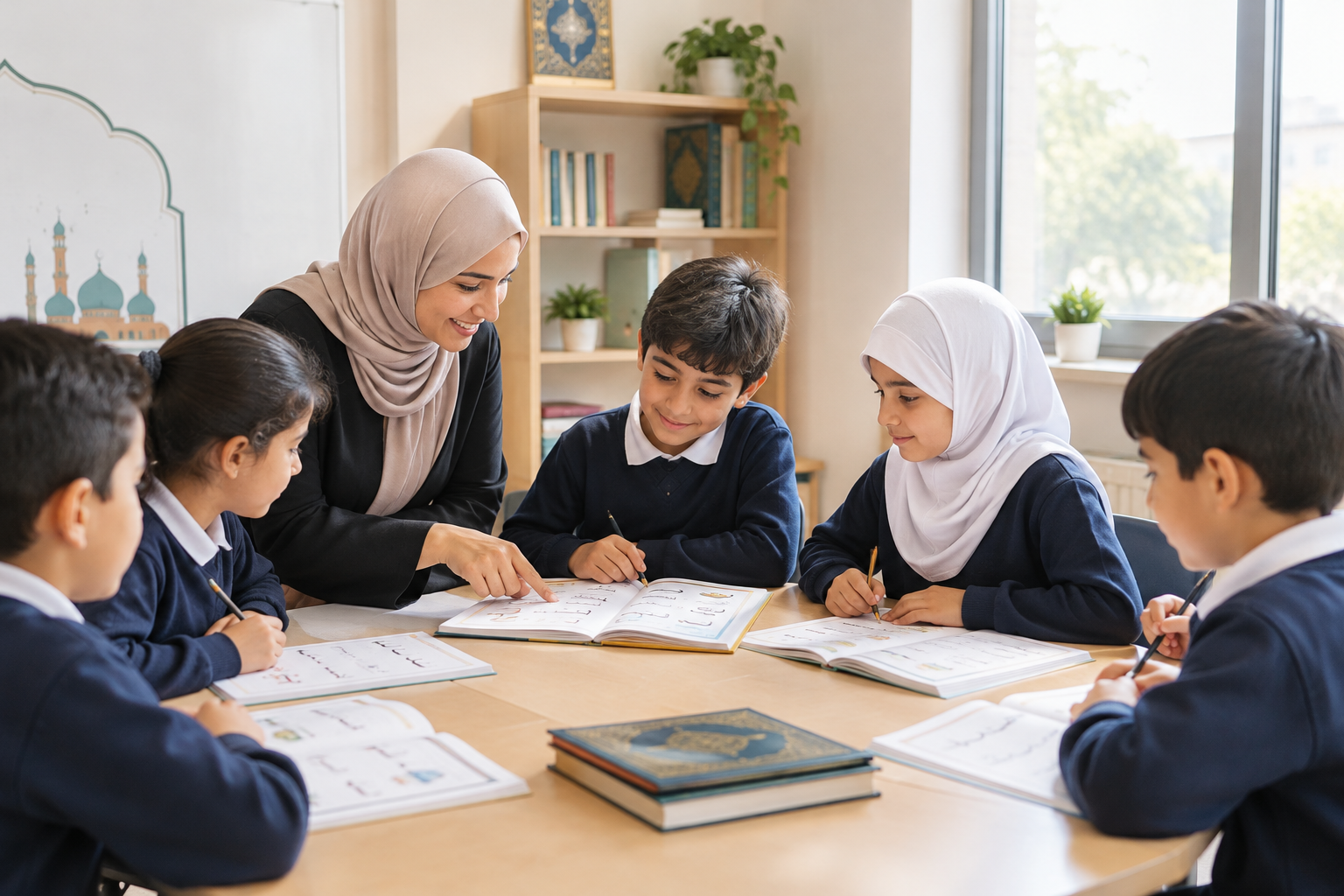
A clear progression from first-letter recognition to confident reading, writing, and understanding—so families can see the practical language milestones children build over time.
Stage 1
01/08
Children identify each Arabic letter and pronounce its sound clearly to build confident reading foundations.
Stage 2
02/08
Learners practice initial, medial, and final letter forms to develop neat, controlled handwriting.
Stage 3
03/08
Guided listening and short exchanges strengthen pronunciation and confident spoken responses.
Stage 4
04/08
Students gain practical vocabulary and useful expressions they can recognize, recall, and use in context.
Stage 5
05/08
Reading develops from single words to short phrases and connected passages with understanding.
Stage 6
06/08
Structured writing builds sentence fluency and confidence in clear written expression.
Stage 7
07/08
Children apply early grammar patterns and comprehension strategies to interpret meaning more accurately.
Stage 8
08/08
Learners connect language study to Arabic textual heritage, building respect and lasting purpose in learning.
Arabic Learning Journey
Our Arabic pathway is intentionally sequenced so families can see how children begin with strong basics, connect core language skills, and steadily progress into clearer expression with consistent teacher support at each stage.
Guided progression
Step 1
Children are welcomed into Arabic with letter recognition, sound accuracy, and practical everyday words, building an encouraging first layer of confidence.
Step 2
Learners connect reading, writing, and speaking through guided practice, short texts, and regular feedback so skills strengthen together, not in isolation.
Step 3
Students expand comprehension and fluency through richer reading, conversation, and purposeful expression, preparing them for more independent language use.
How Arabic learning works
Each lesson blends listening, speaking, reading, and writing through age-appropriate routines, so children build language confidence step by step.
Short, engaging stories build attention and help children absorb new words, rhythm, and sentence patterns naturally.
Structured speaking turns and teacher prompts help students use Arabic clearly in supportive, low-pressure exchanges.
Hands-on activities keep children active in the lesson while reinforcing accuracy, recall, and confident participation.
Key words are taught through familiar topics so meaning is clear and children can apply language in real situations.
Guided reading helps students connect sounds, script, and meaning with clear teacher support at each step.
Short writing tasks strengthen letter formation and sentence building, turning recognition into confident expression.
Together, these methods help students understand Arabic, use it naturally, and grow in confidence across every stage.